Attic ventilation that lets a Fayetteville roof cool off on August afternoons
A roof gets attacked from both sides: sun on top, trapped heat and moisture underneath. Balanced airflow through the attic is cheap protection for the shingles, the decking and the rooms below.
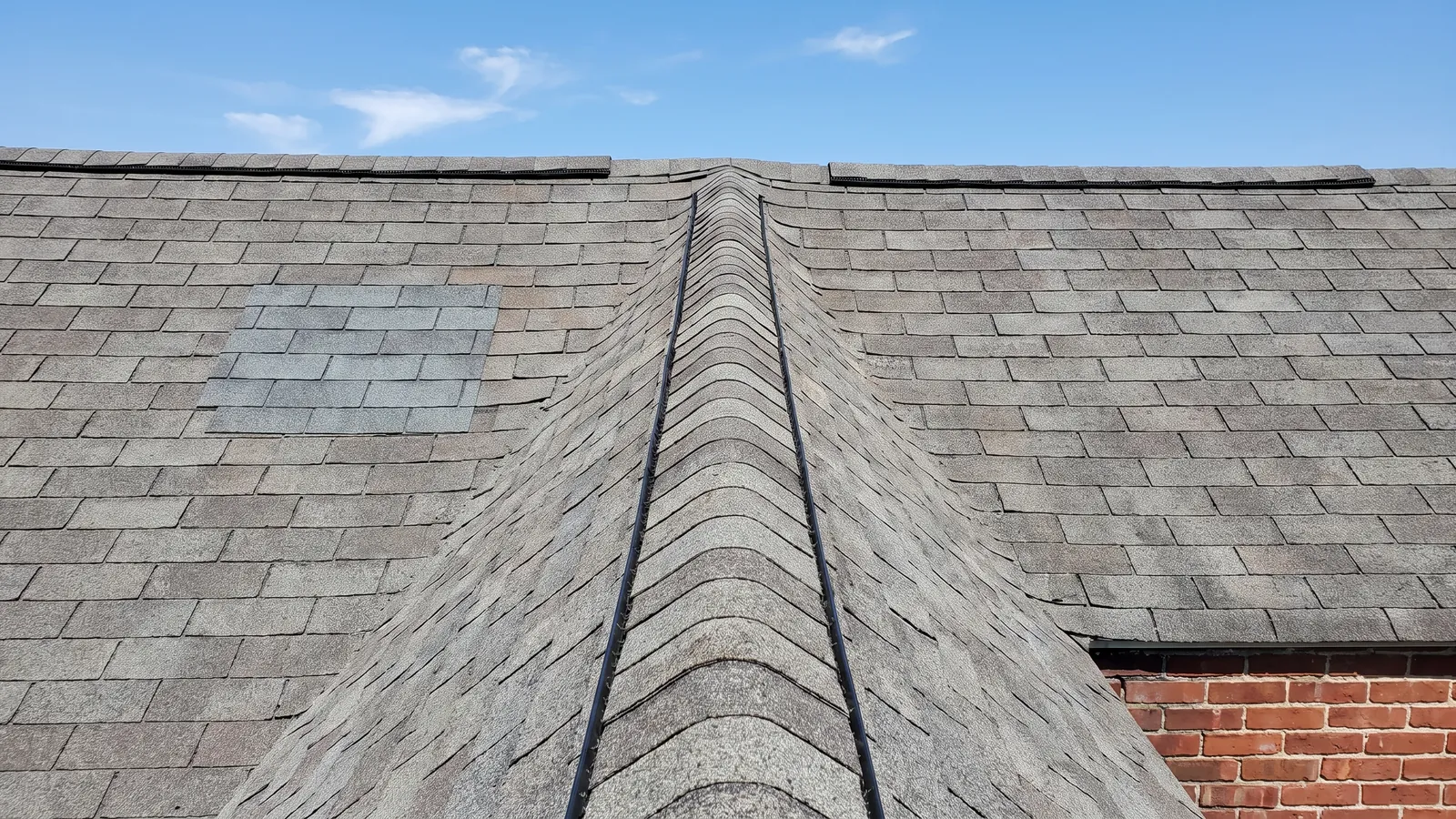
Attic ventilation is simple in principle. Air comes in low, at vents in the soffits under the eaves, and leaves high, through a ridge vent or roof vents near the peak. Hot air rises and pulls cooler air in behind it. When intake and exhaust are balanced, the attic stays closer to outdoor temperature in summer and dry in winter. When they are not, heat and moisture sit against the underside of the roof.
The same faults turn up in attic after attic. Blown-in insulation piled over the soffit vents, so there is exhaust at the top and no intake at the bottom. Mixed exhaust, such as a ridge vent plus old box vents plus gable louvers, where the vents pull air from each other and leave the rest of the attic still. Bathroom fans that blow damp air into the attic instead of outdoors. Cracked plastic box vents that leak in a wind-driven rain.
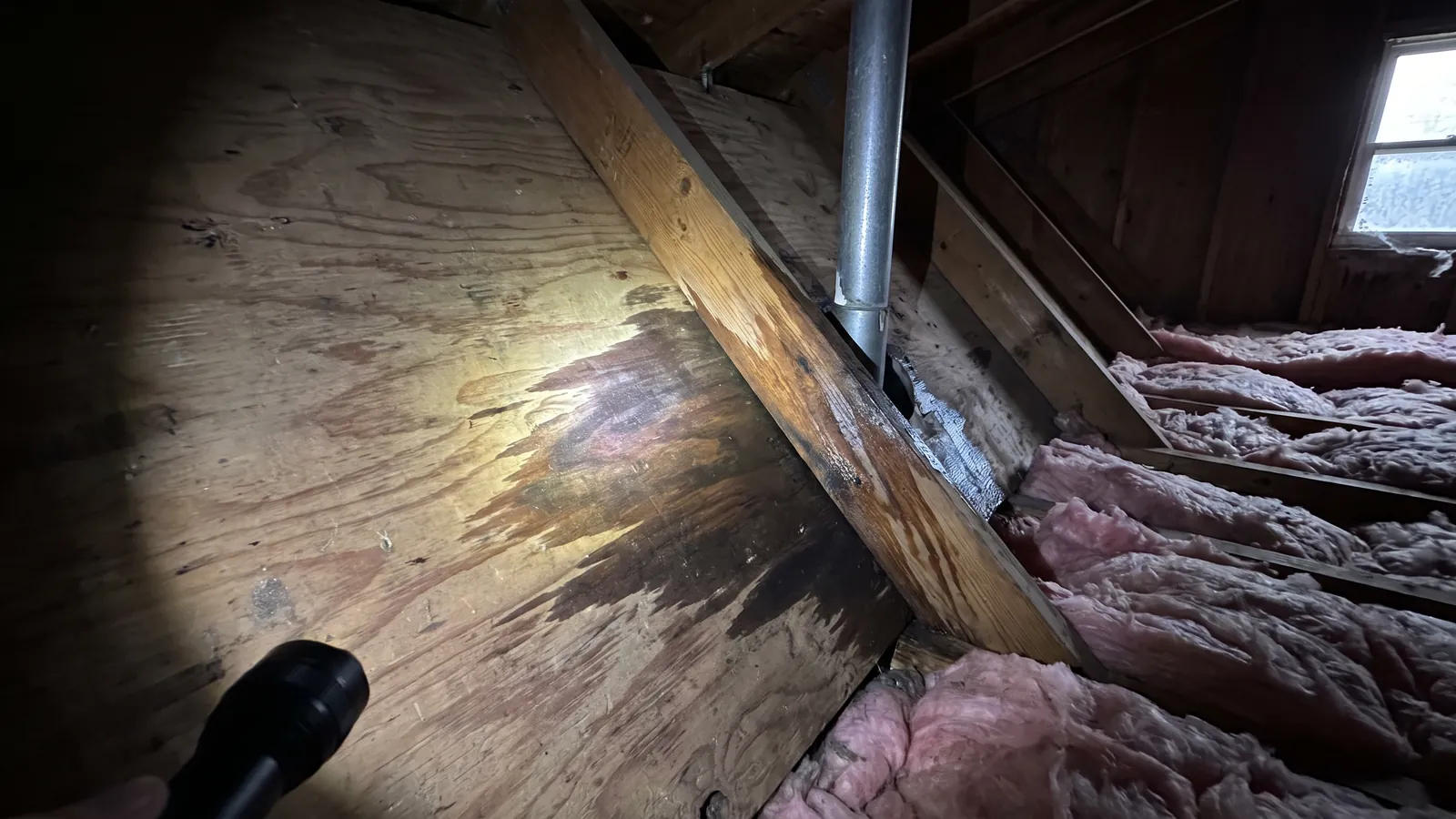
It matters because our summers are long, hot and humid. A stuffy attic bakes shingles from underneath and shortens their life, and moisture that condenses on the decking in cooler months leaves mildew, dark stains and rusty nail tips. The VA pays attention too: its Minimum Property Requirements call for attics and crawl spaces to have natural ventilation to "reduce the effect of excess heat and moisture," and an appraiser can note it when they look.
The fix starts in the attic with a tape measure. We work out the floor area, count the intake and exhaust you have, and balance them: a continuous ridge vent cut in, old box vents removed and patched, baffles installed so insulation stays off the soffits, bath fans rerouted outside. If your insulation is thin, we tell you, and topping it up can be priced with the job. The cheapest moment for all of this is a roof replacement, when the roof is already open.
What the job covers
Intake and exhaust counted
We measure the attic and balance soffit intake against ridge exhaust rather than guessing.
Ridge vent cut in
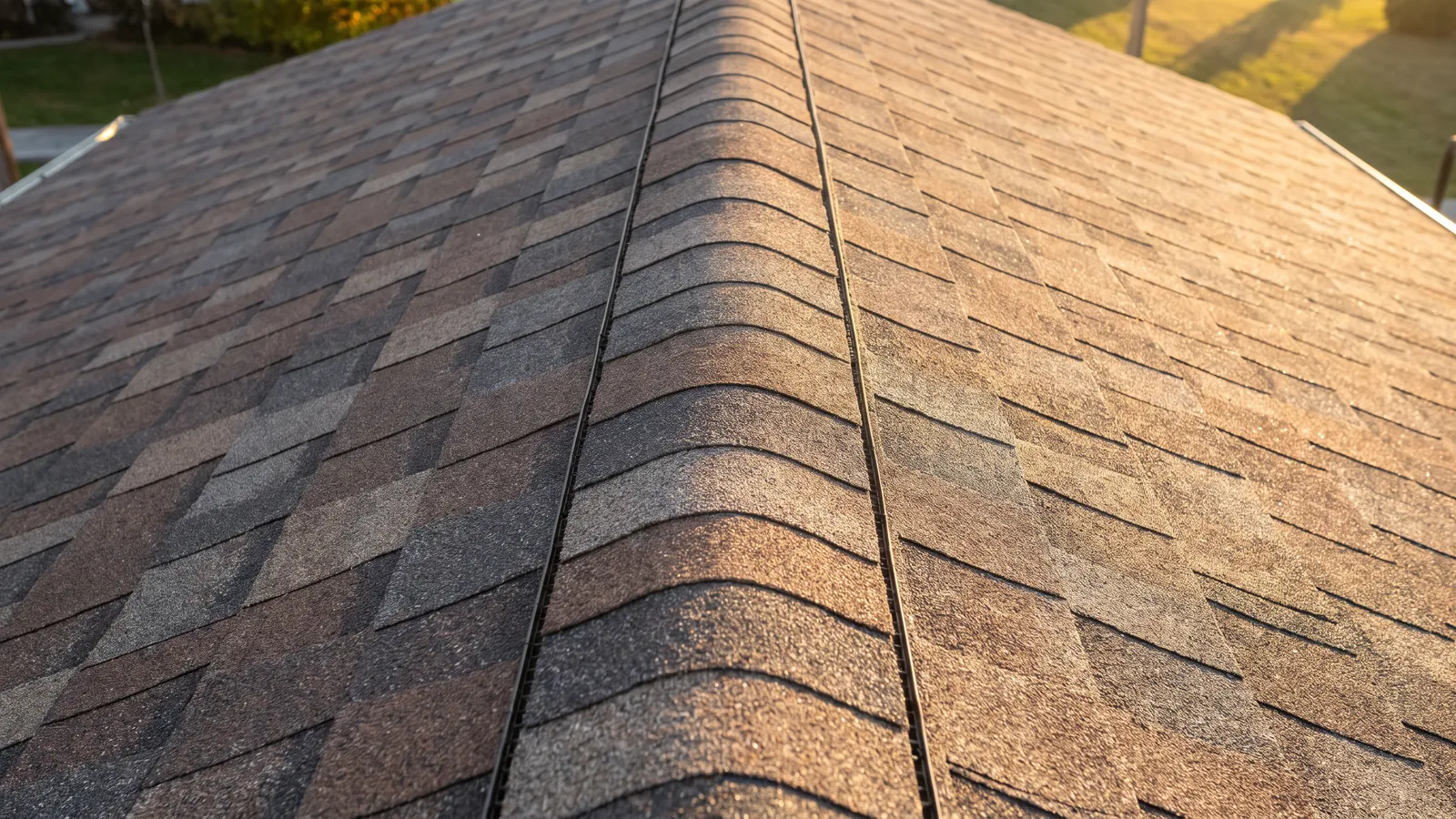
A continuous ridge vent along the peak, with old box vents removed and the holes patched.
Baffles at the eaves
Insulation held back from the soffits so outside air can actually get into the attic.
Bath fans sent outside
Fans that dump moist air into the attic rerouted through the roof or wall with a proper cap.
Moisture signs photographed
Mildew, dark decking and rusted nail tips documented and explained.
Done with the reroof
Ventilation fixed during a replacement costs least, because the roof is already open.
Ventilation work and what drives the price
| Work | Budget range | What to know |
|---|---|---|
| Ventilation check during a roof check | Free | Part of every roof check |
| Ridge vent added during a reroof | Itemized on the roof quote | The lowest-cost time to do it |
| Ridge vent retrofit on an existing roof | Quoted after inspection | Ridge cap removed and reinstalled |
| Soffit baffles | Quoted by count | Installed from inside the attic |
| Bath fan reroute | Quoted per fan | Includes a proper roof or wall cap |
| Box vent replacement | Quoted per vent | Cracked plastic vents are a common leak |
We don't publish one number for ventilation because attics differ so much. You get a written price after we have been in the attic, and the check itself costs nothing.
On the job
Attic ventilation: what people ask us
How can I tell if my attic is poorly ventilated?
An attic that feels like an oven in summer, dark or damp decking, rusty nail tips, a mildew smell, or shingles aging faster on one side. We check all of it from inside the attic.
Can a roof have too many vents?
Mixing different exhaust types can make them work against each other, pulling air from one vent to the next instead of through the attic. Balance matters more than count.
Will a ridge vent leak?
Not when the slot is cut correctly and the right cap goes over it. Leaks usually come from vents installed without the baffles the product calls for.
Do I need a powered attic fan?
Usually not. A balanced passive system handles most homes, and a powered fan can pull cooled air out of the house when the ceiling isn't sealed well.
Does ventilation matter for a VA appraisal?
It can. VA's property requirements say attics and crawl spaces need natural ventilation to reduce the effect of excess heat and moisture, and an appraiser can note problems.
Should I add insulation at the same time?
If it is thin, yes, and we can price it with the ventilation work. It just has to stay off the soffit vents, which is what the baffles are for.