Signs a roof is finished, and signs it only looks tired
A lot of Fayetteville houses were built between 1975 and 2000, and the 1990s shingles on many of them are reaching the end of a 25-to-30-year life. Here's how to read your own roof before anyone gets on it.
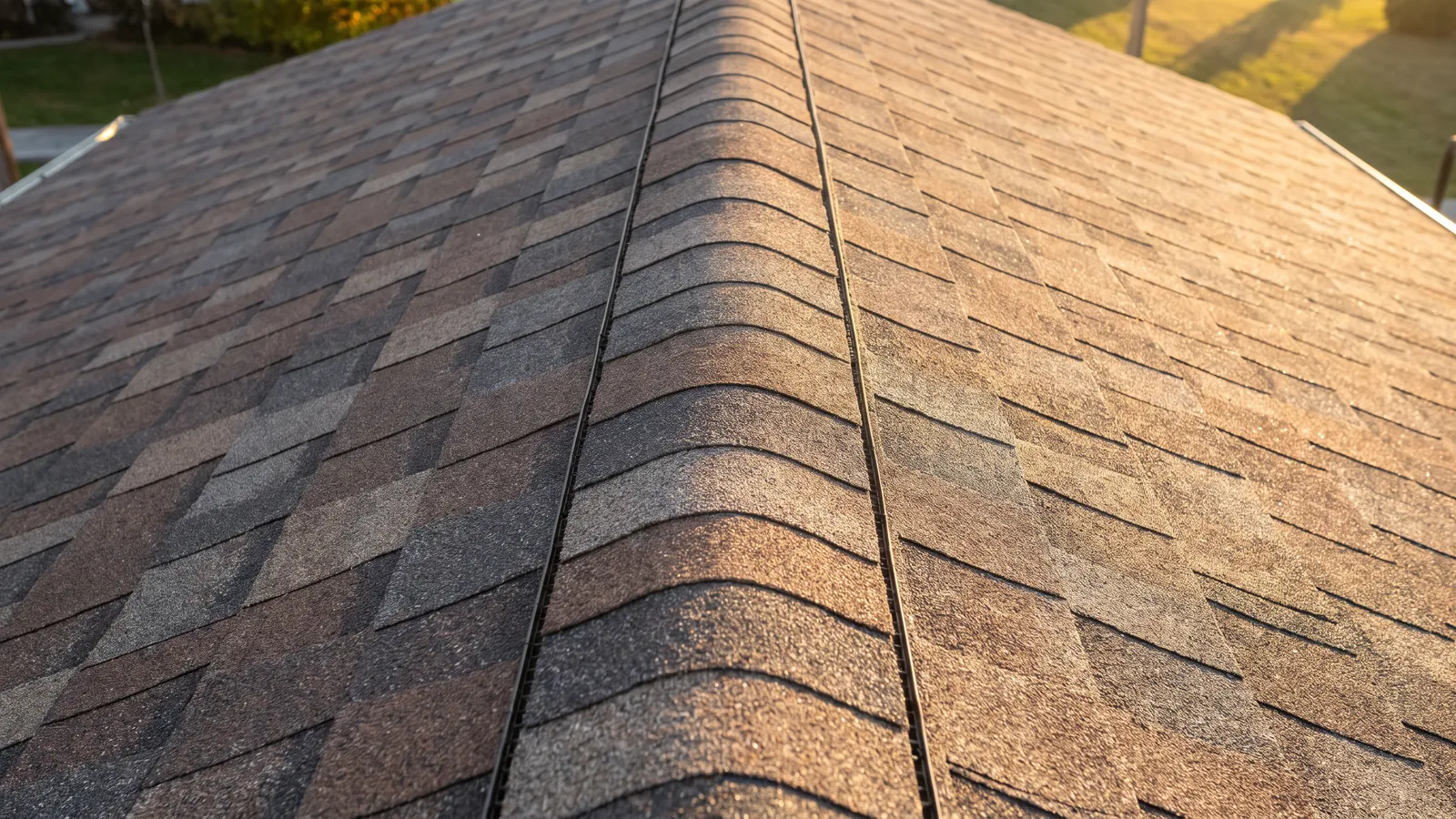
Not every ugly roof needs replacing, and not every roof that looks fine from the street is sound. Hot, humid summers, strong sun, about 47 inches of rain a year and the occasional hailstorm all age shingles here. These are the signs we look for, roughly in order of how much they matter.
| What you see | What it usually means | How urgent |
|---|---|---|
| Granules piling up in gutters and at downspouts | The protective surface is wearing off; the mat underneath ages fast once exposed | Plan ahead |
| Curling or cupping shingle edges | Heat, age and poor attic ventilation; the shingles are losing flexibility | Plan ahead |
| Cracked or missing shingles after a storm | Wind or hail damage; may be a repair or the start of a claim | Soon |
| Dark streaks on shaded slopes | Algae from humidity, usually cosmetic | Low |
| Water stains on ceilings, more than one spot | Multiple failure points, not just one bad boot | Soon |
| Daylight through the decking in the attic | Gaps, rot or missing material | Now |
| Sagging ridge or soft spots underfoot | Decking or framing damage from long-term leaks | Now |
| Rusted or caulk-only flashing at walls and chimneys | Leaks waiting to happen; often fixable on their own | Soon |
The 1990s shingle problem
Many architectural shingles installed in the 1990s are now 25 to 30 years old. In our climate, that's about what they have. Granule loss and brittleness tend to arrive together: the roof starts shedding grit, then tabs crack when they're lifted for a repair. If your roof is that age and has started leaking in more than one place, repairs are buying months, not years.
What isn't a reason to replace
- A single cracked pipe boot causing one ceiling stain.
- A few lifted tabs after a windstorm on an otherwise sound roof.
- Algae streaks alone.
- A gutter overflowing because it's full of pine needles.
Why the attic tells the truth
The underside of the roof shows things the top never will. Dark rings on the decking around a vent pipe, nails that have rusted through, wet insulation, and daylight at the eaves are all easier to read from inside. A hot, stuffy attic with no airflow is a warning on its own: it bakes the shingles from below and holds moisture against the decking, which is why VA's property rules call for attic ventilation that reduces the effect of excess heat and moisture. If you can get into your attic safely, look on a sunny afternoon and again after a rain.
How our roof check works
A roofer walks every slope that's safe to walk, or uses a pole camera on the ones that aren't. They look at the shingles, the flashing at walls and chimneys, the pipe boots and vents, the valleys and the ridge, then go into the attic to check the decking from underneath, the ventilation and any stains. You get the photos and a plain summary: what's fine, what needs a repair, and, if the roof really is done, why. If you only need a repair, that's what we price.
Check it yourself, safely
- From the yard with binoculars, look at each slope for missing, curling or cracked shingles.
- Look in the gutters and at the splash blocks for granules.
- In the attic on a sunny day, turn off the light and look for daylight through the decking, then check for stains around vents and the chimney.
- Stay off the roof. A free check from us gives you close-up photos without the risk.
If you're selling, especially on PCS orders, read the VA and FHA roof rules in our PCS checklist before deciding.
People also ask
How long does a roof last in Fayetteville?
Architectural shingles from the 1990s are generally reaching the end at 25 to 30 years here. Ventilation, sun exposure and storm history move that up or down.
Are dark streaks a sign I need a new roof?
Usually not. They're algae, mostly cosmetic. Granule loss and curling are the signs that matter.
Can one leak mean the whole roof is bad?
Not by itself. One leak is often a boot or a flashing detail. Several leaks in different places on an old roof is another story.
Should I replace before selling?
Only if the roof can't meet the buyer's lender standard with a repair. VA wants a roof that keeps moisture out with reasonable future utility; FHA wants at least two years of remaining life.
Is it worth repairing a 25-year-old roof?
For a small, isolated problem, yes. If it's leaking in several places and shedding granules, put the money toward a replacement.
Keep reading: Roof replacement · Roof inspections · Replacement cost · PCS checklist