Help with a roof insurance claim in Fayetteville, from the first photo to the final invoice
A claim goes better with evidence. We get on the roof, photograph what the storm did, write it up line by line and stand next to your adjuster when they come out. The policy, the deductible and the decision stay between you and your insurer.

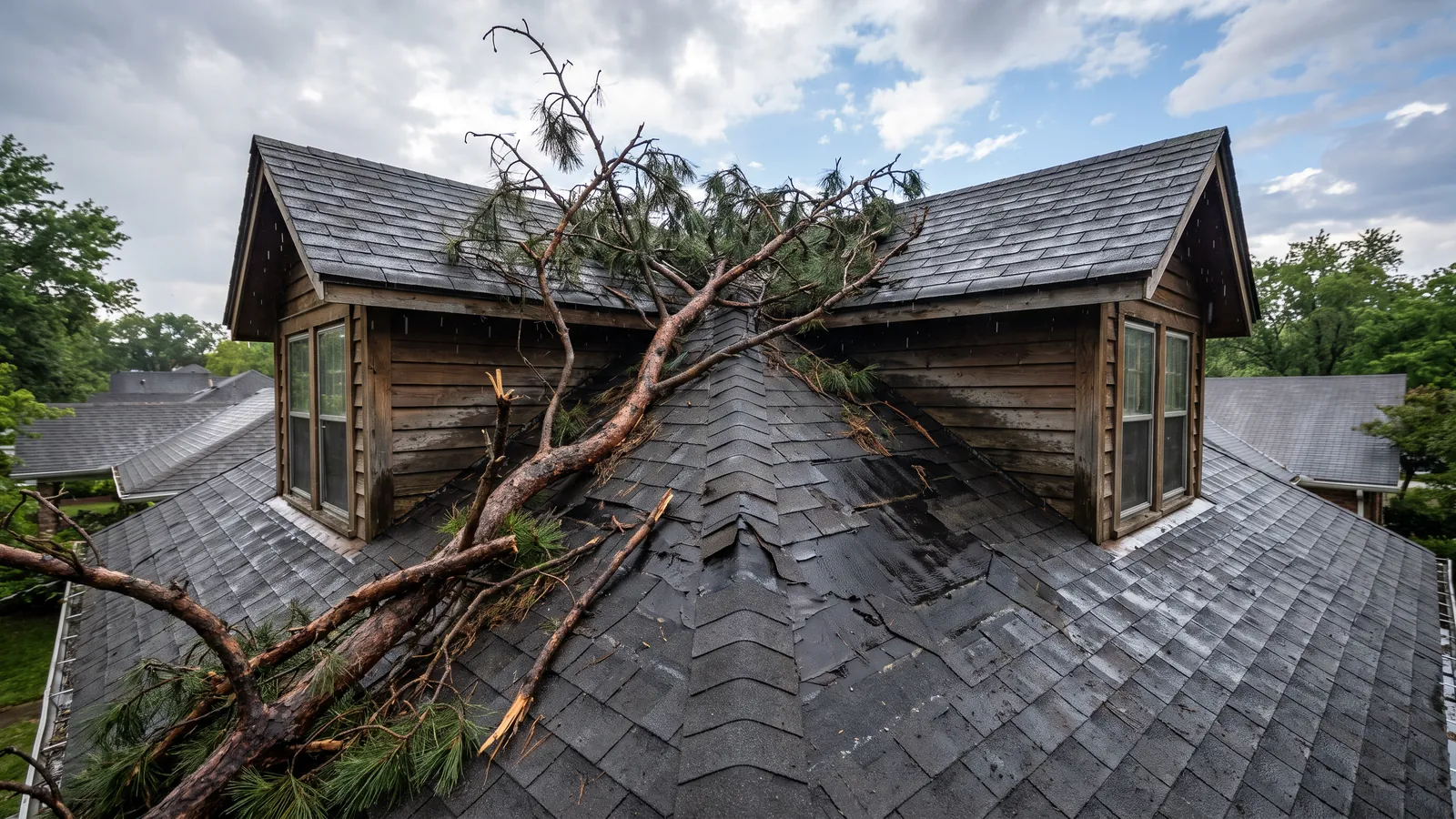
Most roof claims around here start the same way. A summer thunderstorm or the tail of a hurricane crosses Cumberland County, and the next morning there are shingle tabs in the yard, a pine limb across the ridge, or a brown ring on a bedroom ceiling. Hail is the quiet one. Marble- to golf-ball-size stones are common in spring and summer storms here, and the bruises they leave are hard to see from the driveway. The Insurance Institute for Business and Home Safety puts it bluntly: a roof that has already taken hail is "orders of magnitude more likely" to produce a claim from the next hail event. The first visit after a storm matters.
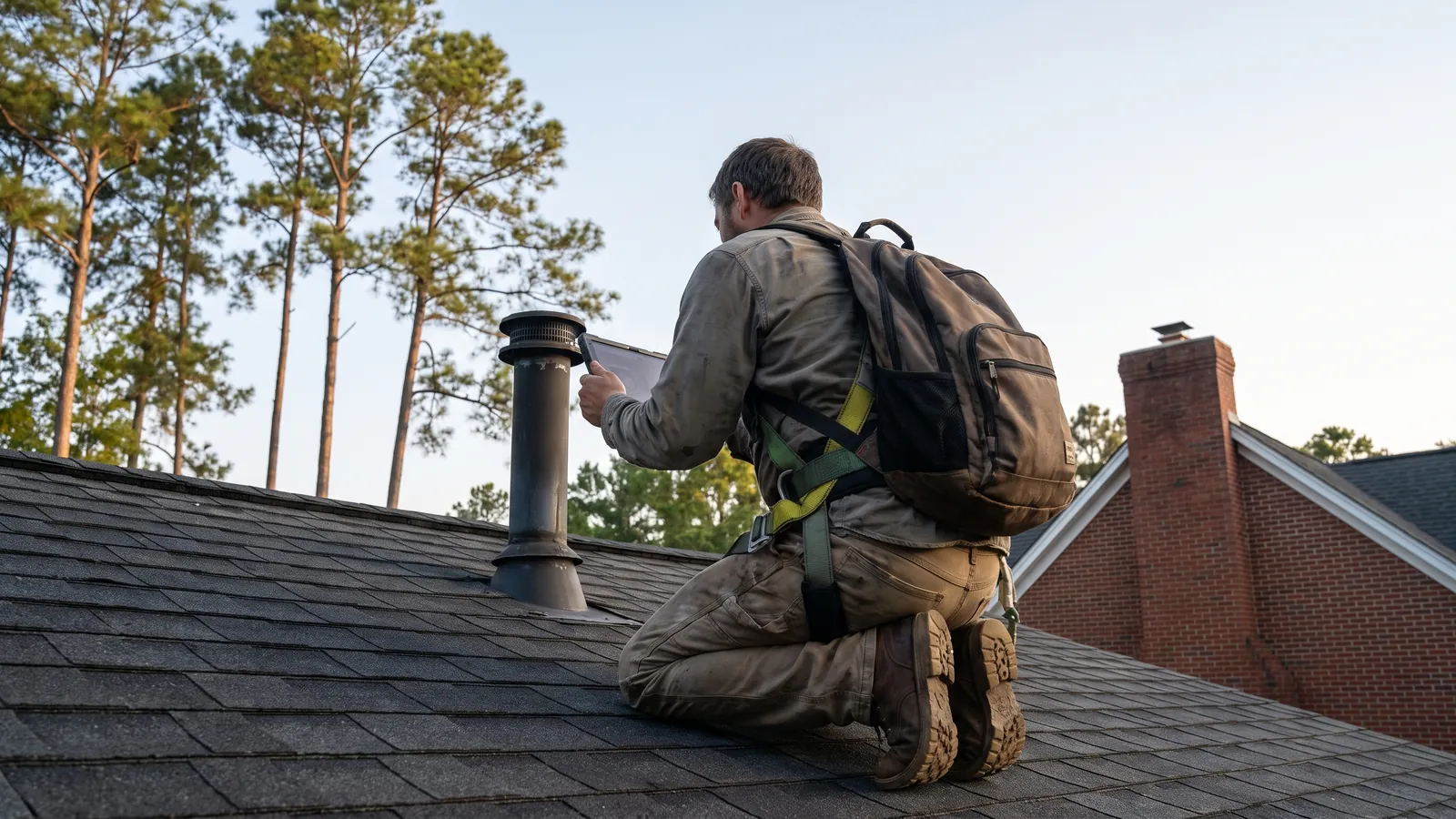
Our part is evidence an adjuster can work with. Dated photos of every slope, close-ups of hits and creases circled in chalk, the soft metals (vents, flashing, gutters) that show how big the hail was, and the attic side of any leak. A written scope that lists the job line by line: tear-off, any decking that has to be replaced, underlayment, drip edge, flashing, pipe boots, ridge cap, haul-off. And a meeting on the roof when the adjuster comes, so what we found and what they see get compared slope by slope instead of argued over the phone a week later.
North Carolina tightened the rules in 2024. Under Session Law 2024-11, in force since October 1, 2024, a contract to repair or replace a home's roof must give you five business days to cancel after an insurance claim is denied. Inside that window the contractor may not start work or take payment, except emergency work to keep the damage from getting worse, and breaking the rule is a Class 1 misdemeanor. The law does not cover work by NC-licensed general contractors and their subcontractors, or companies that only sell roofing material. Separately, a contract you sign at your own front door carries a three-business-day cancellation right under G.S. 14-401.13. We would rather you use those rights than feel rushed, so nothing goes on our calendar until the insurer has answered.
Two things we do not do. We do not act as your public adjuster or negotiate your settlement, and we do not waive, absorb or quietly "cover" a deductible; the deductible is part of your policy. If a claim is turned down, you still get our written cash price and decide for yourself whether to repair now, wait, or ask for a second look. Everything here is general information, not legal or insurance advice. Your policy wording governs.
What the job covers
Photos before anything else
Every slope, every hit and every soft-metal dent, plus the attic, dated and labeled so an adjuster can match them to your roof.
A line-by-line scope
Tear-off, decking, underlayment, drip edge, flashing, boots, ridge and disposal itemized, so a missing line is easy to spot.
On the roof with the adjuster
We meet them at the house, walk the slopes together and point to what we documented.
Protection comes first
A tarp or a quick seal when water is getting in, because policies expect you to limit further damage, and the law allows that work right away.
Your cancellation rights
No work and no payment inside the five-business-day window after a denial, as North Carolina law now requires.
Deductible stays yours
We never waive or absorb a deductible and never act as a public adjuster. You deal with the insurer; we deal with the roof.
What claim-related roof work costs in Fayetteville
| Work | Budget range | What to know |
|---|---|---|
| Roof check with photo report | Free | No obligation; the photos are yours to send to the insurer |
| Emergency tarp or temporary seal | Priced on site | Angi puts emergency service premiums at $100 – $300+ |
| Insurance restoration jobs, typical | $12,000 – $20,000 | Market figure from our research for this area |
| Cash replacements, typical | $8,000 – $12,000 | Market figure; often planned, smaller-scope jobs |
| Items found during tear-off | Itemized | Rotten decking and hidden flashing photographed before it is covered |
| Deductible | Per your policy | Paid by the homeowner, never waived |
The two job ranges come from our market research for this area. They describe different kinds of jobs, not one roof priced two ways: storm claims often cover damage beyond the shingles, while many cash jobs are planned replacements. We price your roof the same whether a claim pays or you do; the written scope after the roof check is your number, and the insurer decides what it pays.
On the job
Insurance claim help: what people ask us
Should I call my insurer or a roofer first?
Either works, but if you are not sure the storm did real damage, have the roof looked at before you file. The roof check is free and the photos tell you whether a claim is worth the deductible. If water is coming in, protect the house first and keep every receipt.
What does the five-day rule mean for me?
Since October 1, 2024, North Carolina gives you five business days after an insurance claim denial to cancel a residential roof contract. During that window the contractor cannot start work or collect payment, except emergency work to stop more damage. We simply wait for the insurer's decision before scheduling.
Will you waive my deductible?
No. The deductible is part of your insurance contract and paying it is your responsibility. What we will do is show you, line by line, what the work costs.
Can you deal with my insurance company for me?
We send our photos and scope to your adjuster and meet them at the house. We do not negotiate your settlement or act as a public adjuster; the claim stays between you and your insurer.
The adjuster says it is wear, not hail. Now what?
Ask for the inspection report in writing and compare it with our photos. Sometimes the gap is one slope or a set of vents. If the decision stands, you still have our cash price and can choose to repair, replace or wait.
How long do I have to file after a storm?
That depends on your policy; some set a deadline counted from the date of loss. Check the policy or ask your agent, and write down the storm date. Our dated photos help pin it down.